A photo posted less than an hour earlier by one of Ryan’s friends.
Ryan in the driver’s seat of a black SUV.
Two women in the back, laughing, champagne bottles raised toward the camera.
The vehicle was unmistakable.
I had bought it for him three years earlier after he lost yet another job, telling myself that supporting your child sometimes means helping even when you no longer understand who they’ve become.
Something cold and resolute settled inside me.
I stepped into the hallway and dialed a number I hadn’t used in years—the non-emergency police line back home. When the dispatcher answered, I calmly gave the vehicle description, the license plate, my name, and reported the SUV stolen. My voice was level, precise, final.
When I returned to Claire’s room, a doctor approached, his face serious.
“She’s deteriorating,” he said. “We need to operate again immediately.”
Alarms sounded, doors opened, the hallway filled with motion and urgency. As staff guided me back against the wall and rushed Claire toward surgery, I understood with painful clarity that this was no longer about a car or even betrayal—it was about consequences that had been quietly accumulating for years.
I didn’t pray for my son.
Discover more
Parenting skills workshops
Pediatric health information
Parenting advice books
I prayed for Claire.
And I prayed the police would move quickly.
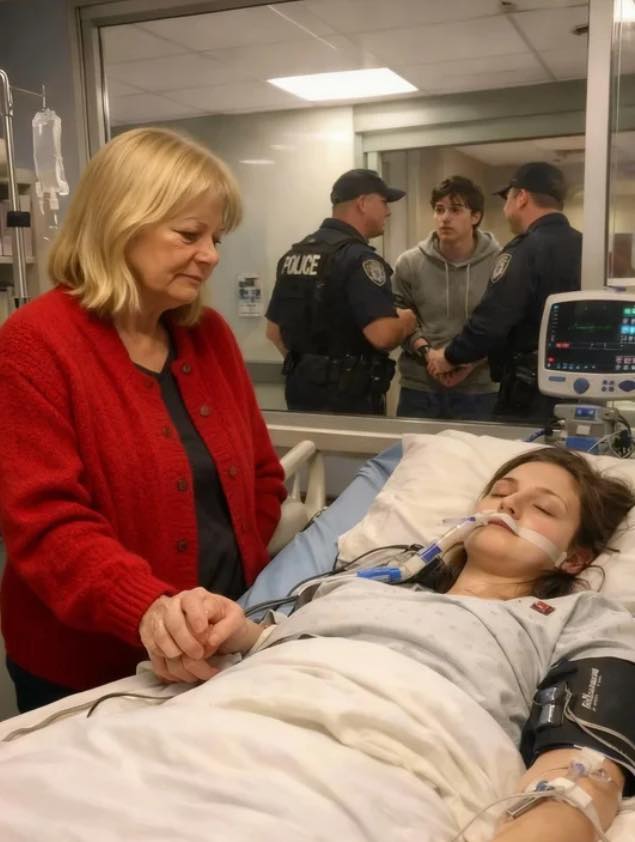
An hour later, my phone buzzed with a restricted number. When I answered, Ryan’s voice was unrecognizable—stripped of arrogance, edged with fear, broken by the metallic clink of handcuffs and the hollow slam of a car door.
“Mom, you have to help me, the cops pulled us over, they’re saying the SUV is stolen, they’ve got me in the back of a cruiser, you need to tell them this is a mistake.”
I stepped away from the ICU window, keeping my voice low and firm.
“It isn’t a mistake, Ryan, I reported it stolen because it doesn’t belong to you anymore, not after tonight.”
“Mom, they found things in the car, the bottles, the bags, I could be in serious trouble.”
“Then you should find a lawyer,” I replied evenly. “But you won’t find money in my accounts, and you won’t find sympathy in my voice. Your wife is in surgery because of a car accident, and it’s interesting how you’re out celebrating in a vehicle with fresh damage on the front end.”
There was a sharp, uneven pause.
“How would you know about the damage,” he whispered.
“I didn’t,” I said. “The officer just confirmed it. Goodbye.”
I blocked his number.
When morning light crept through the blinds and the surgeon finally came out, he looked exhausted but offered a small, reassuring nod.
“She made it through,” he said. “The next couple of days will be critical, but she’s stable.”
I stayed.
I didn’t leave her side, surviving on vending-machine snacks and stubborn determination, watching quiet news reports confirm what I already knew—that a reckless driver in a stolen SUV had been involved in a hit-and-run earlier that night, the paint transfer matching the vehicle now sitting in impound, transforming my son’s recklessness into a felony he could no longer talk his way out of.
On the third morning, Claire stirred, her fingers weakly closing around mine.
“Where’s Ryan,” she asked softly.
I gently brushed her hair back.
“He’s where he needs to be,” I said. “You’re safe now.”
A month later, back in Virginia, legal documents covered my kitchen table. The SUV had been sold properly, every dollar placed into an account for Claire’s rehabilitation—because healing is costly, and she deserved every opportunity.
Ryan’s letters arrived from county jail, apologies written too late, promises made only after consequences arrived. I didn’t open them, because forgiveness does not mean access.
Most evenings, Claire sat on the porch wrapped in a blanket, watching the mountains glow gold at sunset, moving slowly, healing steadily, strength returning piece by piece.
Discover more
Inheritance planning resources
Relationship advice books
Genetic testing services
“You didn’t just save me,” she said one night, looking at me with quiet certainty. “You gave me a way out.”
I sat beside her and handed her a cup of tea.
“Family isn’t about who hurts you and expects loyalty,” I said. “It’s about who stays when things fall apart.”
Inside, the phone rang—the automated tone unmistakable.
I let it ring.
We stayed where we were, listening to the wind move through the trees, knowing that justice had come not through cruelty, but through truth—and that sometimes doing the right thing means allowing someone to face exactly what they’ve earned.
🔥 Continue Reading 👇 Next Page